Congratulations to Gabriel Gegenhuber on Successfully Passing His Rigorosum
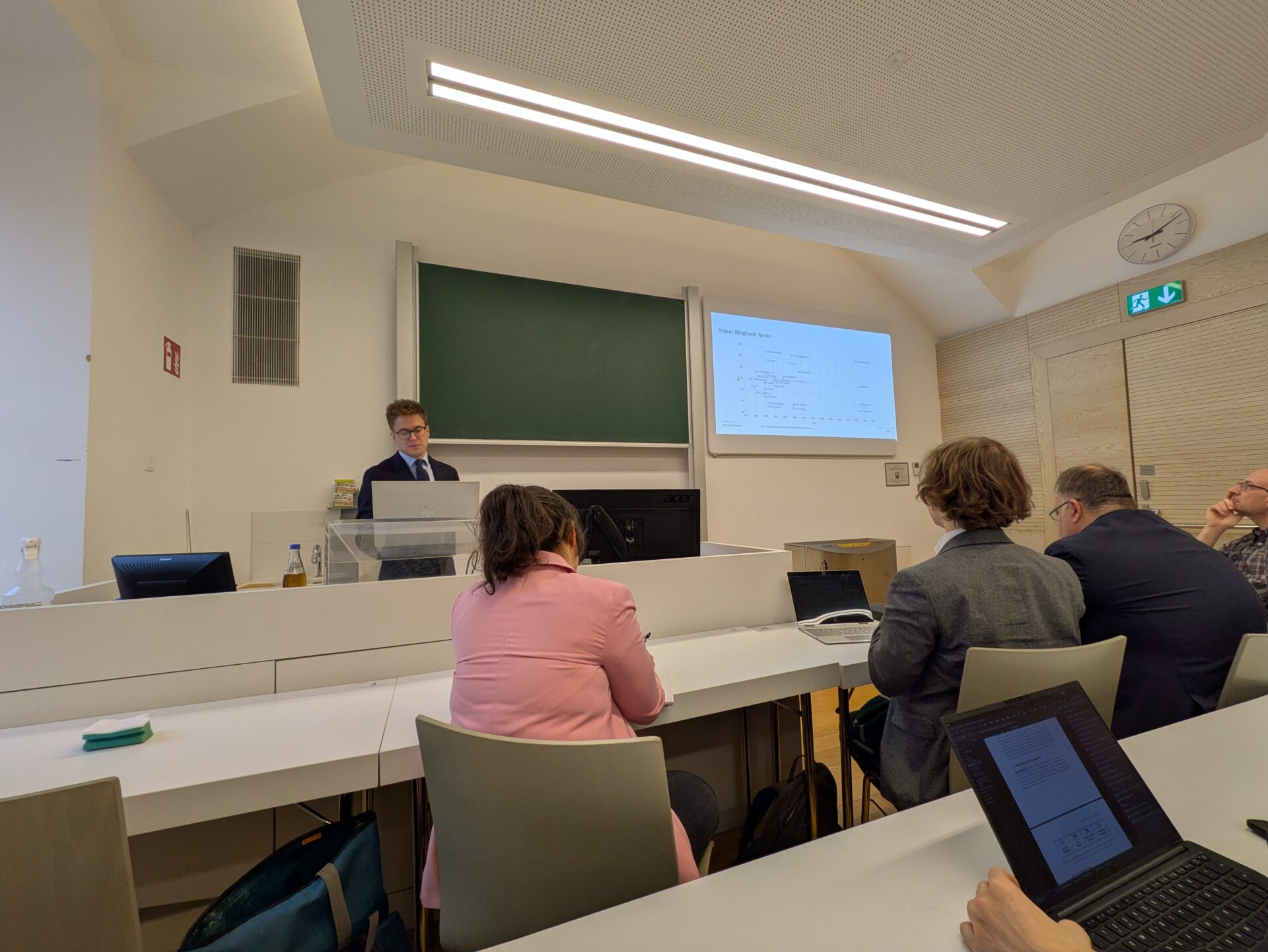
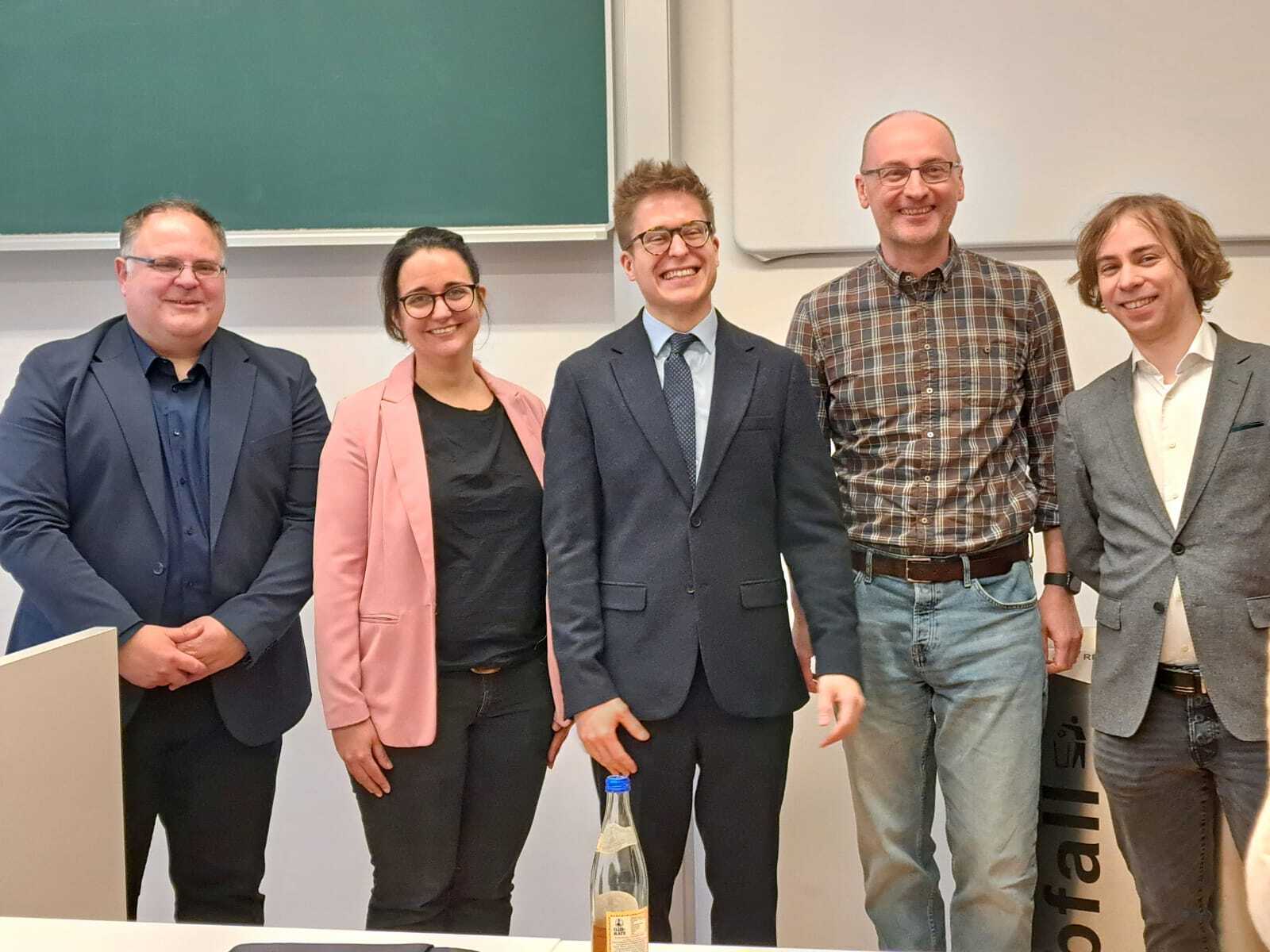
On February 19, Gabriel Gegenhuber successfully passed his Rigorosum with excellent evaluations, defending his dissertation “Democratizing Measurement of Critical Mobile Infrastructure: Security and Privacy in an Increasingly Centralized Communication Ecosystem” before the committee and PhD supervisor Johanna Ullrich.

© Gabriel Gegenhuber
Abstract
Cellular networks serve as the backbone of global communication, providing critical access to telephony and the Internet, often in regions lacking alternatives. However, the growing complexity of these networks, driven by architectural innovations (e.g., Voice over IP, eSIMs) and commercial dynamics (e.g., roaming, virtual operators, zero-rating), remains poorly understood due to the lack of open, scalable, and geographically diverse measurement tools and independent measurement studies. Moreover, access to mobile networks today is no longer limited to the traditional radio interface.
Technologies like Voice-over-WiFi (VoWiFi) offer alternative connectivity paths via third-party Internet infrastructure, extending operator reach into environments with limited cellular coverage. At the same time, over-the-top (OTT) messaging services such as WhatsApp and Signal have become central to modern communication, accounting for a substantial share of global messaging and voice traffic while bypassing traditional operator-controlled channels entirely.
This dissertation addresses these challenges by introducing new approaches for independent, scalable, and reproducible measurements of mobile communication systems without requiring cooperation from network or platform operators. We design, implement, and open-source measurement platforms that enable controlled experiments across cellular radio networks, operator-provided services, and OTT messaging applications. Using these tools, we conduct multi-layer empirical studies and uncover security- and privacy-relevant weaknesses, including inconsistencies in roaming billing and traffic classification, insecure VoWiFi configurations, and metadata leaks in widely used messaging platforms that enable silent user monitoring and denial-of-service attacks.
Overall, this dissertation demonstrates that independent, active measurements are essential for understanding the evolving cellular communication system. It provides practical tools and empirical evidence that increase transparency and support future research into the security and privacy of modern mobile communication systems.