Congratulations to Sebastian Schrittwieser on the Successful Completion of His Habilitation
In early November, Sebastian Schrittwieser, key researcher at SBA Research and head of the CD-Lab AsTra, successfully completed his habilitation, “Protecting Software against Man-at-the-End Attacks: Evaluation Methodologies, Obfuscation Classification, Novel Protections, and Empirical Insights,” and received excellent evaluations.
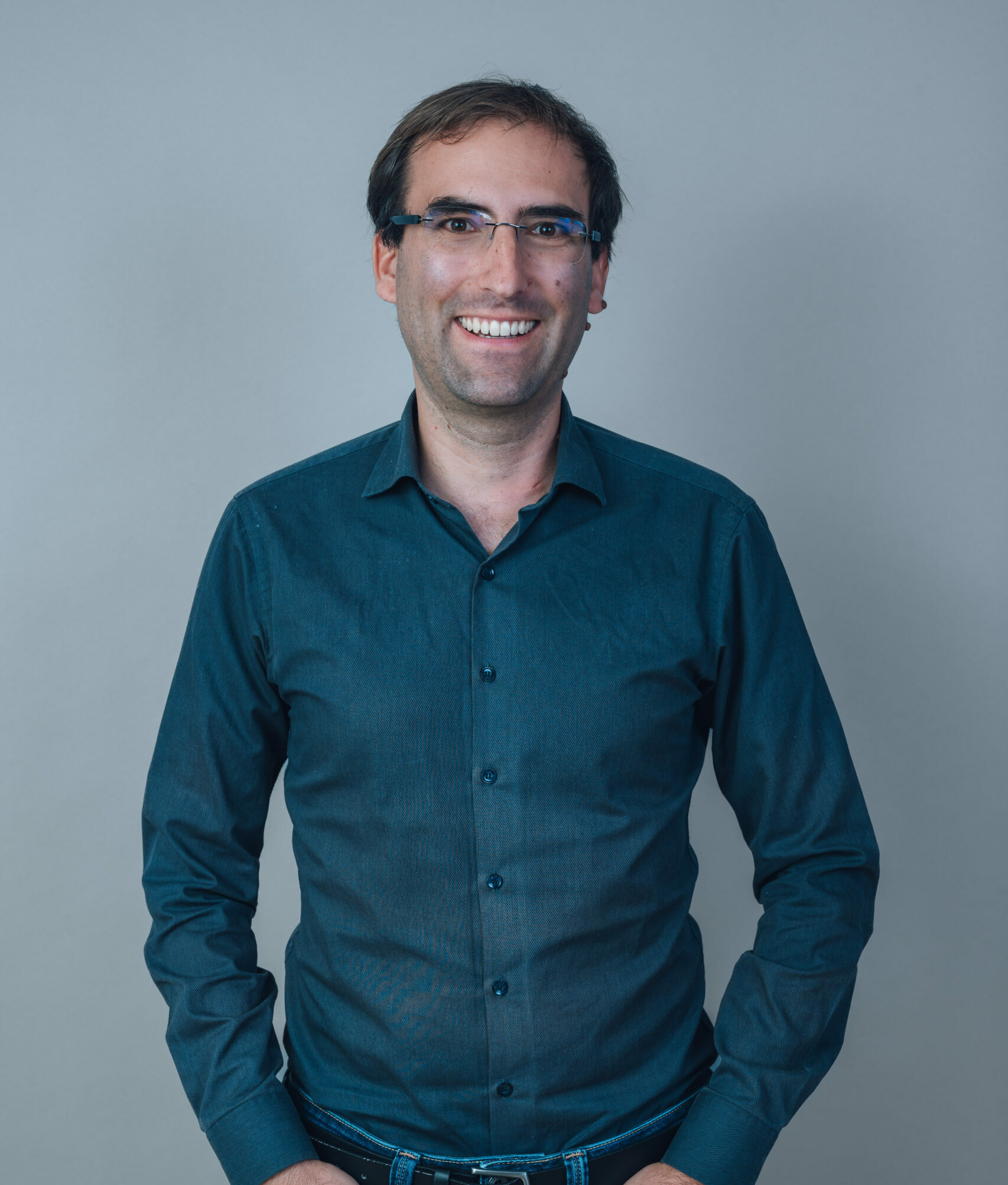
© Niklas Schnaubelt
Christopher Kruegel, UC Santa Barbara, Mila Dalla Preda, University of Verona, and Corinna Schmitt, Universität der Bundeswehr München served as reviewers.
© Sebastian Schrittwieser
Abstract
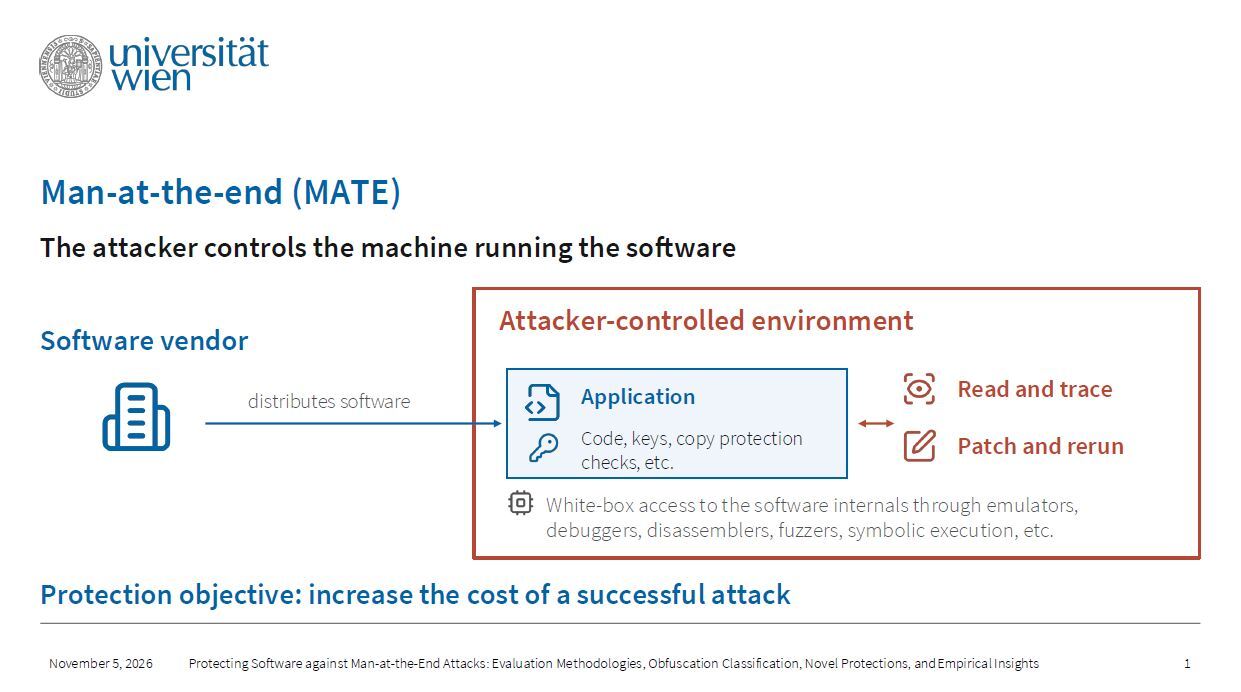
Software that runs on devices fully controlled by end users faces a distinct class of threats: Man-at-the-End attackers who can inspect the program code statically, observe its execution dynamically, and modify it without restrictions. As software increasingly controls critical functions in consumer devices, industrial systems, mobile platforms, and cloud-connected services, the protection of program code and embedded, sensitive data such as cryptographic keys has become a central security concern. Addressing these challenges requires reliable evaluation methodologies, empirical insight into real-world exposures, and novel protection concepts that remain effective even in adversarial execution environments.
The publications that form this cumulative habilitation thesis contribute to these areas in three ways. First, a systematic study of 571 research papers reveals widespread methodological shortcomings in software protection evaluations. The analysis identifies incomplete threat models, insufficient sample sets, and missing strength measurements, and proposes concrete recommendations for transparent, comparable, and reproducible evaluations. Further, we introduce multiple techniques based on code complexity matrices, embedding vectors of intermediate representation code, and visual analysis to demonstrate how the structural impact of individual and layered code transformations enable robust identification of the obfuscation techniques present in a program.
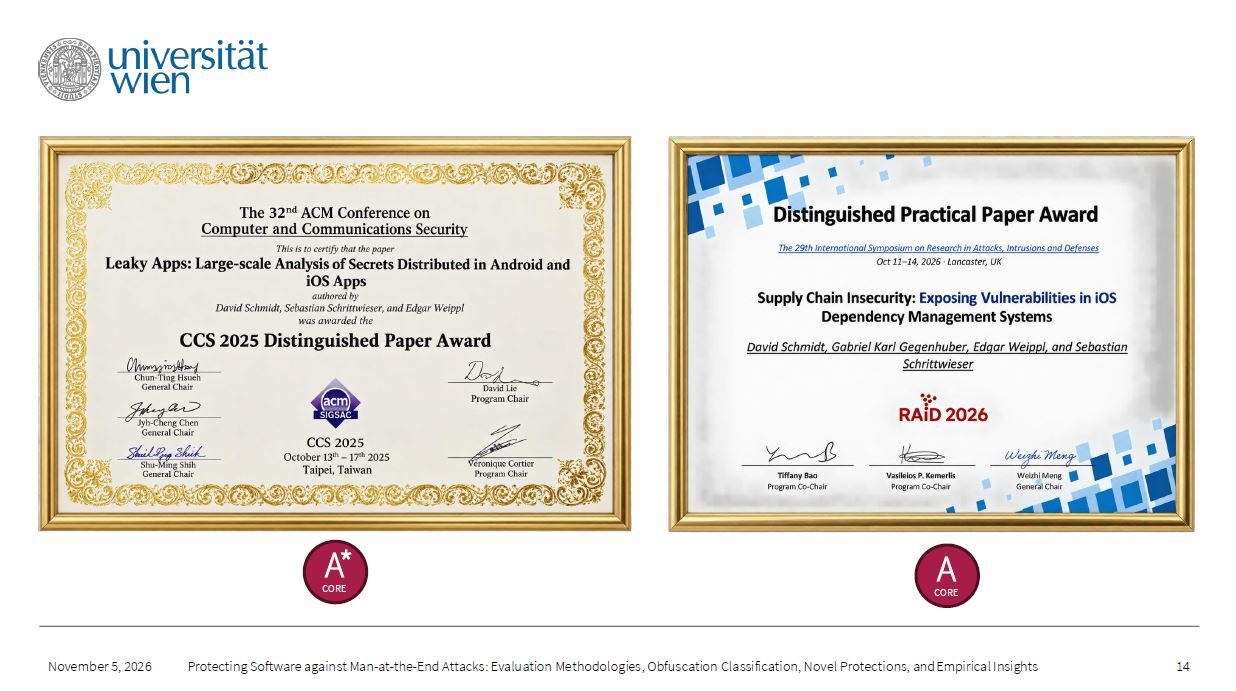
Second, a large-scale analysis of 10,331 Android and iOS applications shows that secret leakage is a common and systemic problem. Valid API keys for cloud services, access tokens for private code repositories, cryptographic keys, and internal project artifacts are frequently included in production app bundles. Many of these secrets provide access to high-value online services and remain valid long after their removal from newer app versions. These findings illustrate how MATE attackers can obtain sensitive information from deployed software and highlight shortcomings in current development and release practices. Third, novel protection concepts are introduced both at code and data level. Our SaMBA approach uses equality saturation and e-graphs to generate structurally complex Mixed Boolean-Arithmetic expressions, producing obfuscations that resist a broad range of state-of-the-art expression simplification tools. A novel data-transformation method based on perturbed symmetry generators further shows how sensitive input data can be altered so that it remains useful for the training of machine learning models without exposing it to an attacker with full control over the execution environment.
This significant academic milestone recognizes his outstanding research contributions and dedication to advancing scientific knowledge.
Congratulations, Sebastian!