Understand Software Ecosystems • Identify Risks • Secure the Future
I-SEE (Integrated Software Ecosystem Evaluation) is a data-driven analysis framework for software projects. It identifies which parts of a system are particularly maintenance-intensive, error-prone, or dependent on specific individuals, libraries, or supply chains. To achieve this, I-SEE analyzes not only the current state of the codebase but also the entire development history of a project.
Software is not a static product. It is an ecosystem that evolves over years, consisting of proprietary code, external dependencies, and the expertise of the people who develop it. Over time, complexity increases, knowledge is lost, dependencies become outdated, and AI-generated code increasingly finds its way into systems. Maintaining visibility across this ecosystem becomes progressively more challenging.
I-SEE restores that visibility. Rather than evaluating a project as a snapshot or relying on isolated metrics, it examines the interaction between code, dependencies, and team knowledge throughout the project’s entire evolution. This makes it possible to identify how risks develop over time, where knowledge silos may exist, and where external dependencies could become critical weaknesses. The result is a clear and actionable risk landscape of your software system, independent of the programming languages used.
The greatest value emerges when testing and review resources are limited. An AI-assisted risk assessment highlights the areas with the highest potential risk, enabling teams to focus their efforts where they will have the greatest impact. During code reviews, the same assessment – combined with more than 40 evaluation criteria and intuitive project maps – helps reviewers prioritize the most critical changes first.
Key Focus Areas
- Predictive Maintenance. Identify maintenance and defect risks early and focus testing and review efforts where they are most effective, rather than reacting only after problems have already occurred.
- Knowledge Loss Within Teams. Make knowledge distribution across the system visible and identify critical knowledge silos that may create operational risks.
- Dependency Risks. Assess external libraries and software supply chains, including known vulnerabilities (CVEs) and their evolution over time.
- Managing AI-Generated Code. Provide a data-driven foundation for monitoring the quality, maintainability, and provenance of AI-generated code, enabling informed decisions about its use.
- Digital Sovereignty. Make dependencies on individual providers, platforms, and supply chains transparent.
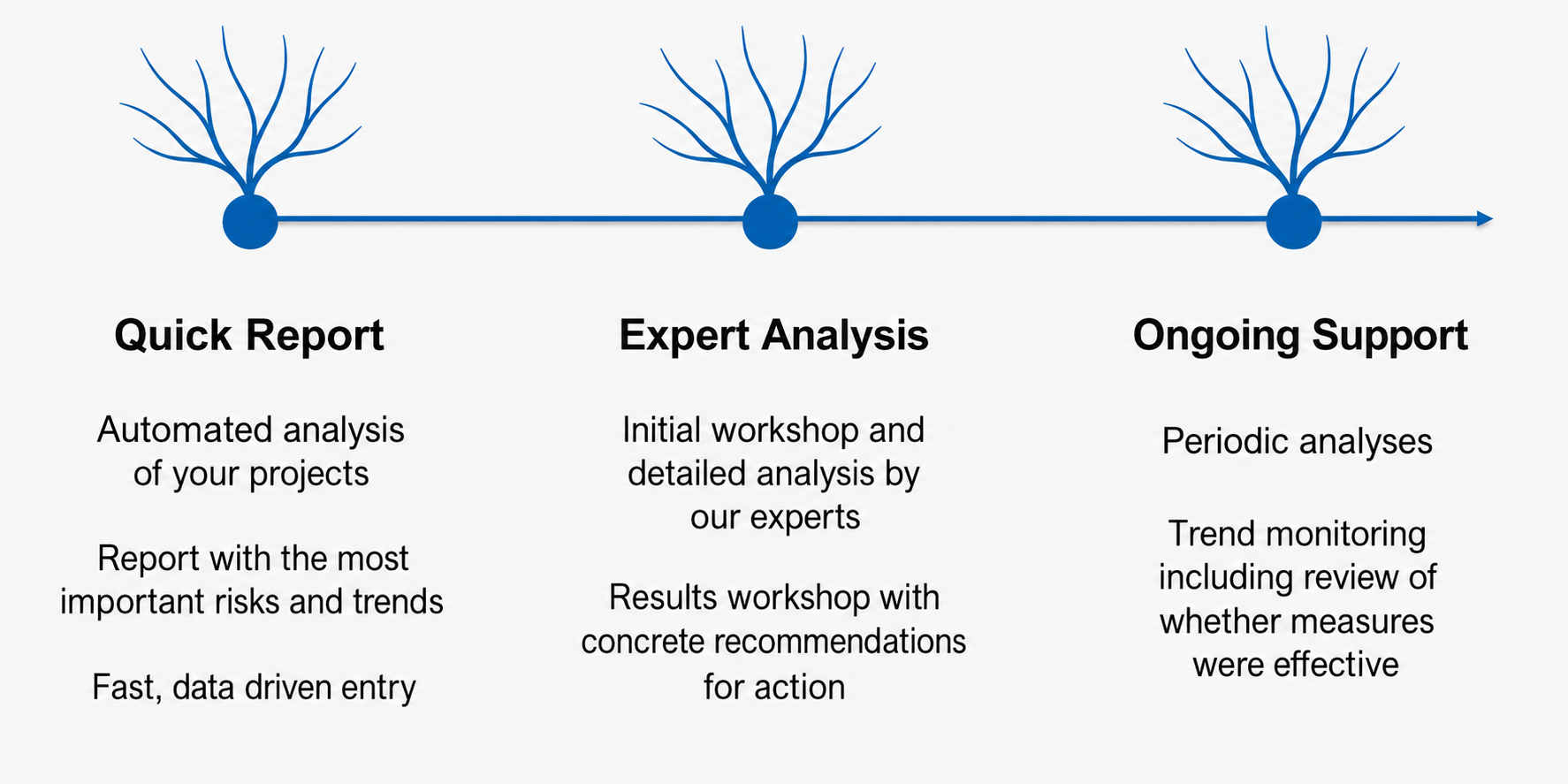
I-SEE can be used in various phases and to varying degrees:
Our experts:



Your contact person: Kevin Mallinger, kmallinger@sba-research.org
Photo credit: Niklas Schnaubelt